
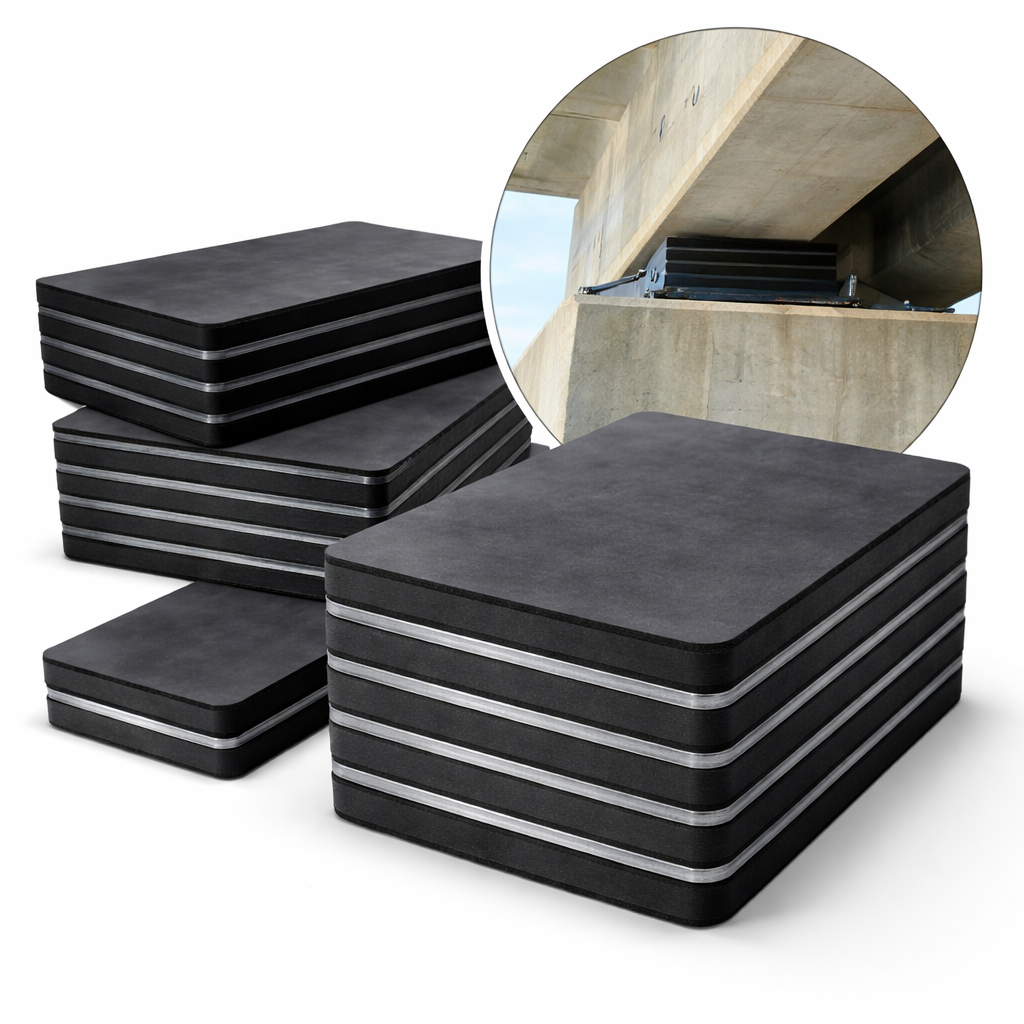
Introduction to Bearing Pads
Bearing pads are elements in bridge construction, providing a supportive interface between the bridge superstructure and its substructure. Their primary function is to evenly distribute loads, accommodate movements caused by temperature changes, and reduce vibrations, ensuring the durability and safety of the bridge.
Bearing pads are installed at the points where the bridge deck meets its supports, such as piers and abutments. Their use is essential in both new constructions and during refurbishment projects to ensure compliance with modern engineering standards and safety regulations.
Choose our bearing pad depends on factors such as bridge span, expected load, movement requirements, environmental conditions, and regulatory standard, consulting with qualified engineers and suppliers ensures the optimal solution for each project.
Functions of Bearing Pads
- Load Distribution: Improved structural integrity and safety. Bearing pads help spread the weight of vehicles and other loads across the bridge, preventing concentrated stress on specific areas.
- Movement Accommodation: They allow controlled movement due to thermal expansion, contraction, and other dynamic forces, protecting both the superstructure and substructure.
- Vibration Reduction: Pads absorb and dampen vibrations from traffic and wind, enhancing comfort and reducing wear and reducing structure-borne noise.
- Minimising Wear: By reducing friction between structural elements, bearing pads extend the lifespan of the bridge.
- High ability to absorb shocks : By absorbing applied shocks improve impact resistance.
Key Benefits
- Reduced maintenance costs.
- Enhanced bridge longevity
- Better accommodation of environmental and load-driven movement
Types of Bearing Pads
- Elastomeric (Neoprene) Bearing Pads:
- Made from synthetic rubber compounds.
- Flexible, durable, and resistant to weathering.
- Suitable for most small to medium-span bridges.
- PTFE (Polytetrafluoroethylene) Sliding Bearings:
- Incorporate a low-friction PTFE surface for enhanced movement.
- Used where large longitudinal or lateral movement is expected.
- Steel Bearing Pads:
- High strength, suitable for heavy loads and specialised applications.
- Often combined with elastomeric layers for improved performance.
Contact Us for Expert Advice
If you have questions about the best bearing pad for your bridge project, or need technical specifications, our team of experts is here to help. Get in touch to discuss your requirements and receive tailored recommendations.